
3D renderings for renovation projects: before and after visuals
Show clients exactly what their renovation will look like. 3D renderings turn vague plans into concrete visuals that close deals faster.
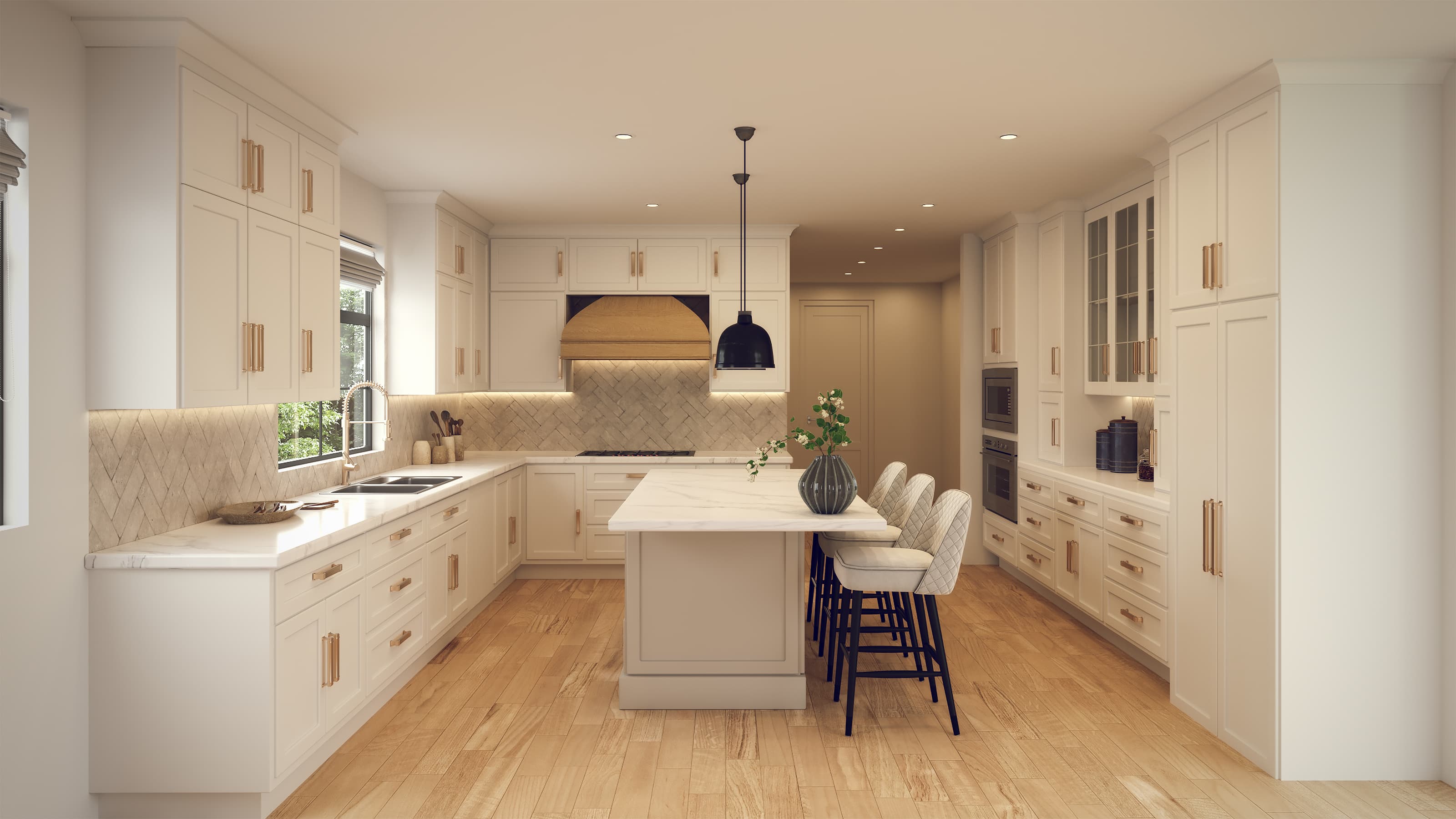
A contractor shows a homeowner a 2D floor plan. The homeowner nods politely. They don't actually see the kitchen. A week later, they hire someone else who showed them a 3D rendering. That's the gap you're leaving open.
3D renderings close that gap. They let clients see the finished space before the first wall comes down. For renovation projects, that visual certainty moves deals forward.
The renovation rendering problem
Homeowners don't think in blueprints. They think in spaces. A floor plan tells them the dimensions. A rendering tells them whether they'll like living there.
Renovation projects live in a weird zone. You're not selling a finished home. You're selling a promise. Contractors make that promise with words and sketches. Developers and real estate agents make it with renderings.
The best renovation marketers use both. A rendering shows the client the end result. The before photo proves it's real.
What before-and-after renderings actually do
They collapse the gap between imagination and reality. A contractor describes: "We're taking out this wall, moving the kitchen island, upgrading the appliances, replacing the flooring." The homeowner tries to picture it. They fail. They get nervous. They hire someone cheaper.
A before-and-after rendering doesn't ask the client to imagine. It shows them. The before is the current state. The after is the finished space, photorealistic, with materials and lighting that match the actual renovation plan.
Clients see: square footage, ceiling height, natural light, how furniture will fit, finishes, layout flow. They see it in color and proportion, not in words.
That confidence matters. It shortens sales cycles. It reduces scope creep. It cuts back-and-forth on design decisions.
When renderings earn their cost
Not every renovation needs a rendering. A bathroom tile refresh doesn't. A $300,000 kitchen redesign does.
Renderings work hardest on projects where:
- The space changes shape (wall removal, layout redesign)
- The client is investing $50,000 or more
- The renovation is structural, not cosmetic
- The homeowner has a mortgage or financing dependent on clear plans
- You're competing with other contractors
If a client is torn between two quotes, the quote that includes a rendering wins. It's concrete proof you understand their vision and can execute it.
How to use before-and-after pairs
The rendering alone is powerful. The before-and-after pairing is a story.
You place the before photo (actual current state of the space) alongside the rendering. The client sees the transformation. This works in:
- Sales presentations and pitch decks
- Social media (before-and-after side-by-side is a format people stop to look at)
- Email campaigns to past clients or referral networks
- Your website portfolio
- Virtual tours where you lead with the after, then pull back to show the before
The before photo must be the actual space, shot with proper lighting and angles. A blurry phone photo undercuts the rendering credibility. Professional before photography, paired with a clean rendering, tells clients you take the project seriously.
The timing question
Render early. Ideally, during the sales and design phase, before you've locked in materials and timeline. A rendering that shows the client's chosen finishes (cabinet color, countertop material, tile pattern) is more persuasive than a generic one.
You're not rendering late-stage construction progress. You're rendering the end state of the renovation, in color, with the actual materials the client will see.
Photoreal renderings take 3 to 5 business days. Plan accordingly. If you're closing a renovation deal, a rendering isn't an add-on. It's part of your standard proposal.
Reality check
A rendering is not the final product. It's a contract. It's a promise. If your rendering shows marble countertops and quartz is what ships, your client's trust evaporates.
Renderings work only if they match the actual renovation. The materials shown must be the materials installed. The layout must be the layout built. The lighting must be realistic based on the windows and fixtures in the actual space.
That accuracy is worth the cost. It prevents misalignment, cuts revisions, and gives clients a north star to hold you to.
The competitive edge
Most contractors show plans and photos. Some show plans, photos, and a verbal walk-through. The ones who close deals faster show plans, photos, and a photorealistic 3D rendering.
Renovation clients are spending serious money. They want to see what they're paying for. A rendering gives them that.
Flylisted delivers photoreal 3D renderings in 3 to 5 business days, with revisions included. If you're selling renovation projects, start here.