
Twilight architectural photography: the case for the extra hour
Twilight shots cost more time and money. Here's why they're worth it for commercial real estate and hospitality marketing.
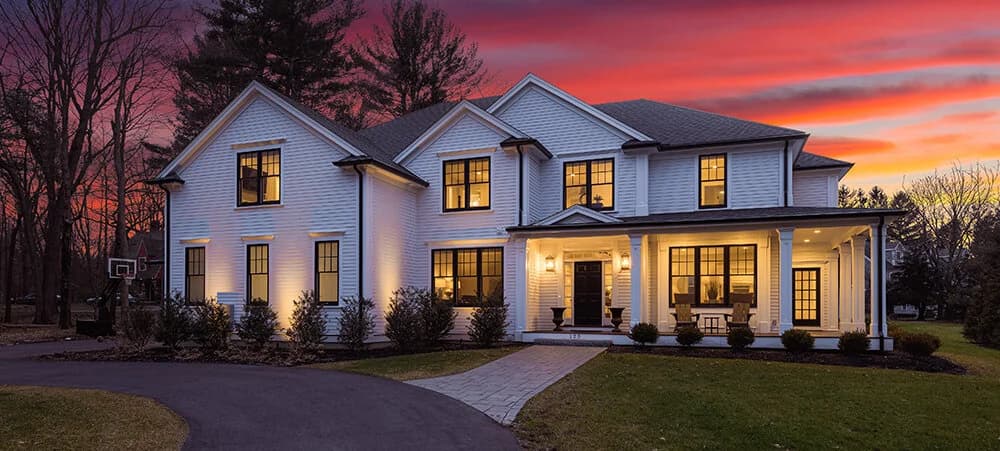
Twilight photography means staying on site after sunset, paying crew overtime, and renting lights. Most agents and developers skip it. Most shouldn't.
Twilight is the 20-40 minute window after the sun dips below the horizon but the sky still holds color. It's a narrow window. It requires planning, timing, and equipment. But it's the only time a building's exterior lighting reads as intentional rather than accident.
Why natural light fails at dusk
Shoot a commercial building at 5 p.m. on a clear day, and you get high contrast. Harsh shadows. The facade looks flat. Shoot it at 8 p.m. at night with only uplighting, and it looks cold and artificial.
Twilight bridges that gap. The ambient sky light is blue and saturated. Architectural lights punch through without overwhelming the frame. The building reads as three-dimensional. Details in stonework, glass, and landscaping still show. The composition feels intentional, not overexposed or blown out.
This matters for renderings and construction documentation too. A twilight reference photo gives architects and visualization teams a clear model for how accent lighting should perform once the building is occupied.
The business case
Twilight photography costs 30 to 50 percent more than daytime work. Crew stays late. Lighting gear comes out. You're working against a tight schedule.
But hotels, resorts, and multi-family properties with strong hospitality positioning need twilight shots. Hospitality marketing lives on those images. An evening lobby shot with warm light, a pool deck at dusk, a rooftop bar at the magic hour. These aren't nice to have. They're required.
Commercial office buildings are less obvious, but the case is strong if the building has accent lighting or sits in an urban context. A well-lit facade at twilight reads as premium. It signals investment in the property's presentation. Buyers and tenants notice.
Rendering firms know this too. They charge more for twilight scenes. If you're already paying for a photoreal exterior rendering, twilight reference photos from the actual site are cheap insurance.
Execution matters
Twilight photography isn't guesswork. The window closes fast. You need
- A clear shoot date tied to weather forecast and sunset time
- Arrival 90 minutes before sunset to frame and test exposure
- All architectural lighting turned on and tested
- A clear understanding of which angles matter most
- A crew that knows how to expose for the sky without losing building detail
Poor twilight shots (overexposed sky, murky building) are worse than no twilight shots. The cost to do it right is worth the price.
Flylisted has shot 6,953 projects across New England, South Florida, the Caribbean, and California. Twilight work on commercial and hospitality properties is standard. The turnaround on residential photo is 24 hours, but architectural and hotel photography follows a shoot-to-edit timeline that accounts for the complexity of the light and the detail work required.
When to skip it
Twilight photography isn't mandatory for every project.
Skip it for residential single-family homes in suburban markets. The market doesn't expect it, and the cost doesn't justify the upside.
Skip it if the building has no accent lighting or sits in a context where daylight is the story (a mountain resort during ski season, a waterfront property where water and natural light are the focus).
Skip it if you're on a tight budget and daylight photos already read well.
But for hotels, resorts, multi-family with strong evening appeal, and commercial buildings with intentional lighting design, twilight is an investment that moves the needle on how the property reads in marketing.
The competitive angle
Most developers and hospitality operators aren't shooting twilight. Their competitors aren't either. That's opportunity.
A hotel with strong twilight imagery stands out on OTA sites and in digital marketing. A multi-family property with evening pool and courtyard shots has an edge in the luxury rental market. An office building photographed at dusk reads as more finished, more invested in.
If your comps aren't doing it, twilight becomes a differentiator. If they are, it becomes table stakes.
The cost is real. The time commitment is real. But the image quality and marketing impact justify the investment for the right property types and markets.
Explore Flylisted's commercial and hospitality photography services