
Virtual staging that doesn't look fake: the standards we hold to
Most virtual staging looks exactly like what it is. Here's how Flylisted approaches it differently, and what separates credible work from obvious fakes.
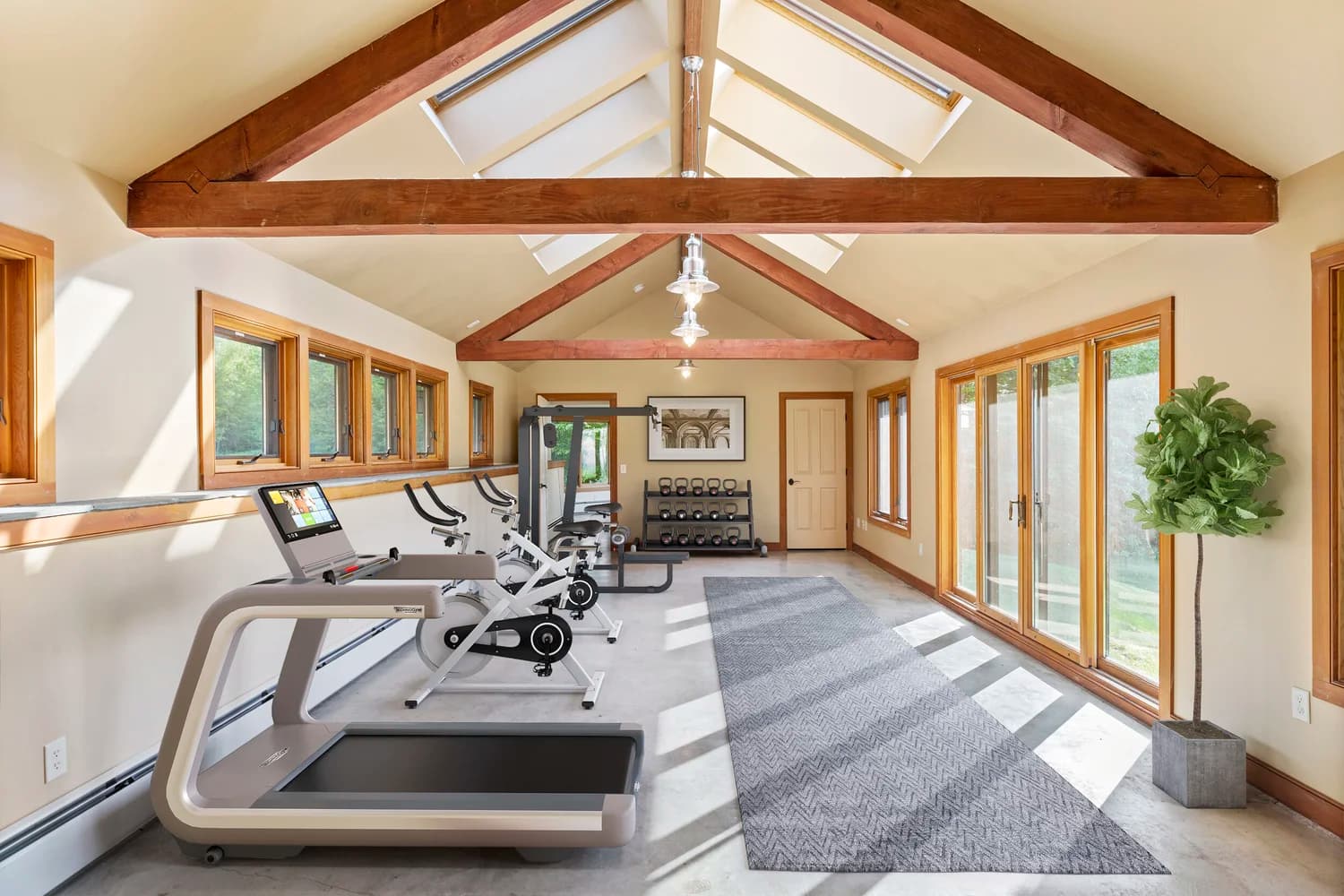
Most virtual staging looks exactly like what it is: a stock sofa dropped into a photo by someone who never saw the room.
Buyers clock it in seconds. Agents know it. Yet the market is flooded with cheap, unconvincing work because the barrier to entry is low and the turnaround pressure is real. Here is where we draw the line.
The three ways virtual staging fails
Bad virtual staging fails in predictable ways. Knowing them makes it easier to evaluate any vendor, including us.
Light mismatch. The room was shot at 2 p.m. with warm directional light coming through west-facing windows. The furniture renders sit in flat, neutral light that belongs in a different building. The eye catches this immediately, even when buyers cannot name what bothers them.
Scale and perspective errors. A sofa that seats four occupies the footprint of a loveseat. A rug floats two inches above the floor. These errors signal "fake" before the buyer has processed a single feature of the home.
Wrong style for the property. A 1920s Craftsman bungalow dressed in ultra-minimalist Scandinavian furniture. A waterfront condo staged with heavy traditional pieces that block the view. The staging is technically competent and still completely wrong for the listing.
What credible virtual staging actually requires
Getting it right starts before staging software is ever opened.
The base photograph has to be correct. Virtual staging cannot fix a dark, poorly exposed room. Flat angles hide spatial depth and make furniture placement awkward. The source images need to be shot with proper lighting, wide-angle lenses that still respect perspective, and composition that reflects how a buyer would actually stand in the space.
Flylisted shoots residential properties on a 24-hour turnaround. That speed does not come from cutting corners on lighting or composition. It comes from a documented process built across 6,953 projects. Virtual staging applied on top of a well-shot base image works the way it is supposed to.
After the base, style selection matters. Buyers respond to staging that feels plausible for the neighborhood, the price point, and the architectural character of the home. A good stager asks what a real interior designer would spec for this property, then executes against that brief.
The specific standards we hold to
These are non-negotiable on every virtual staging job we deliver.
- Light matching. Furniture shadows fall in the same direction as the room's natural light. Ambient fill matches the color temperature of the source image.
- Correct scale. Every piece is sized to real-world dimensions. A standard 84-inch sofa reads as exactly that in the finished image.
- Floor contact. Nothing floats. Rugs cast soft contact shadows. Chair legs meet hardwood, tile, or carpet believably.
- Style brief per property. We match furnishings to the price point and architectural character. A coastal New England property gets a different treatment than a South Florida high-rise or a California mid-century.
- No over-cluttering. The point of staging is to show how a space lives, not to fill every surface. Restraint reads as confidence.
- Clean final delivery. No artifacts at the edges of furniture. No visible seams where the digital insert meets the real floor or wall.
When virtual staging is the right call
It is not always the right call. Occupied homes with existing furniture generally benefit more from professional photography and, where needed, light decluttering guidance. Virtual staging earns its place in specific situations.
Vacant properties are the clearest case. Empty rooms read as smaller than they are and give buyers nothing to anchor their experience. Staging a vacant listing virtually costs a fraction of physical staging, ships in 24 to 48 hours, and can be revised without moving a single piece of furniture.
New construction and pre-sale development units are the other strong use case. When a building is still under construction, virtual staging applied to architectural photography or photoreal 3D renderings lets buyers visualize finished units months before they exist. Flylisted has delivered this workflow for multi-family developers across New England, South Florida, and California.
Renovation or repositioning projects also benefit. If you are rebranding a rental asset or repositioning a property after a rehab, virtual staging lets you show the intended aesthetic before physical furniture is sourced.
How to evaluate virtual staging before you buy it
Ask any vendor for a set of before-and-after images from a real project, not a portfolio of only finished results. Look at the base photo quality. If the source images are dark or poorly composed, discount the finished staging regardless of how polished it appears. Good staging on a bad photograph still produces a bad listing photo.
Check the shadows. Check the floor contact. Look at scale relative to doors and windows. These details are visible in every image if you look for them.
Then check the style judgment. Does the furniture feel right for the property, or does it feel like a default template? Default templates are a symptom of volume-only operations that do not brief individual projects.
We have marketed over 4,000 properties and hold a 5.0-star rating across Google and Facebook. That track record exists because we treat each deliverable as something that goes in front of real buyers making real decisions.