
Virtual vs. physical staging: how to choose the right call
Staging decisions cost money and time. Here's a straightforward framework for choosing virtual staging, physical staging, or nothing at all, based on the property in front of you.
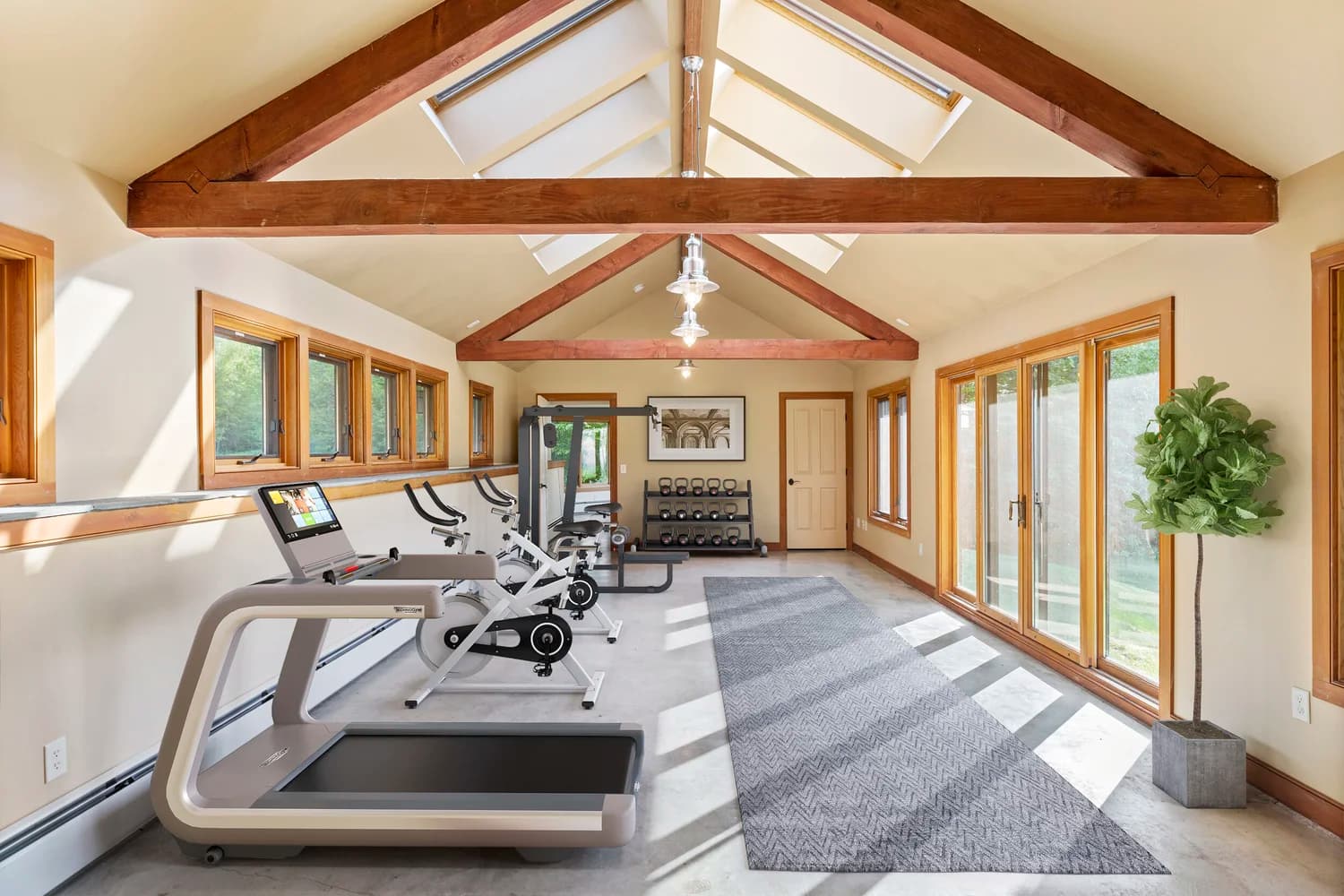
Staging decisions are budget decisions. Make the wrong one and you've either overspent on furniture for a tear-down or undersold a $2M listing with empty rooms and bad light.
Here's a straight framework for picking the right approach every time.
When virtual staging wins
Virtual staging makes sense when the property is vacant, the bones are good, and a buyer just needs to see how the space lives. It's also the only practical option when a listing needs to go live fast and there's no time to coordinate movers and rental furniture.
At Flylisted, virtual staging works directly off the photography shoot. We deliver edited photos with furnished rooms that look photoreal, not cartoon-rendered. The turnaround fits inside a standard residential delivery window. For most vacant condos, townhomes, and entry-to-mid-level single-family homes, it does the job at a fraction of physical staging cost.
Virtual staging is also the right call when:
- The seller is still living in the property but specific rooms (a spare bedroom, a finished basement) are cluttered or bare.
- The property is a new construction unit that hasn't been furnished yet and you need listing photos before the model suite is ready.
- You're marketing a rental unit that turns over frequently and you can't justify repeated physical staging costs.
One honest limitation: virtual staging shows potential, not reality. Buyers who walk through an empty unit after seeing furnished listing photos sometimes feel the gap. That's manageable at most price points. It becomes a larger issue as the price climbs.
When physical staging earns its cost
Physical staging pays off when the sale price is high enough that a few thousand dollars in furniture rental moves the needle on perceived value, and when buyers are likely to tour in person before making a decision.
Luxury single-family homes above $1.5M are the clearest case. At that price point, buyers are often making emotional decisions in the room, not just scrolling photos. The texture of a throw blanket, the smell of fresh flowers, the way afternoon light hits an actual dining table: those things register in a way that pixels don't replicate.
Physical staging also works harder when:
- The floor plan is awkward and furniture placement helps buyers understand traffic flow.
- The listing is in a competitive market segment where comparable homes are already physically staged.
- Your photographer can shoot a fully staged home and capture the light, depth, and detail that comes from a real set.
Note that physical staging and professional photography are not interchangeable investments. Physical staging without strong photography is a waste. The staging has to be captured correctly to matter online, which is where most buyers first encounter a listing.
When you can skip staging entirely
Skip it when the property sells on its land, location, or lot, not its interiors. Teardowns, land listings, heavily distressed properties, and commercial conversions rarely benefit from staging at any level. Buyers for those properties are underwriting the asset, not imagining their furniture in the living room.
Also skip it when the seller's existing furnishings are neutral, clean, and appropriately scaled. A well-kept, lived-in home with good furniture doesn't need staging. It needs a strong photographer who knows how to direct a scene and handle natural light. Decluttering and a cleaning crew will outperform virtual staging here every time.
Finally, if a listing is priced aggressively for a fast sale, skip staging and spend the budget on photography and social distribution instead.
How the photography layer changes everything
Here's what most agents miss: the quality of your photos determines how well any staging approach performs.
Virtual staging applied to flat, poorly lit photography looks exactly like what it is. Physical staging shot with a wide-angle phone camera looks sloppy and small. Neither outcome serves the listing.
Flylisted has shot over 6,953 projects. The properties that perform best online, regardless of staging approach, share one thing: photography that captures space, light, and scale accurately. That's the baseline. Staging is the layer on top.
For residential shoots, Flylisted delivers edited photos within 24 hours. That window is tight enough to fit inside most listing prep timelines without slowing down your go-live date.
A simple decision tree
When you're standing in a property trying to make the call, run through this:
- Is the home vacant? Virtual staging is likely the right move unless the price point is above $1.5M or the property has a complex floor plan that needs physical guidance.
- Is the home furnished but cluttered or sparse in certain rooms? Virtual staging on specific rooms only.
- Is the price above $1.5M with expected in-person buyer traffic? Physical staging is worth the cost. Pair it with a professional shoot.
- Is the existing furniture clean, neutral, and well-scaled? Skip staging. Focus on photography.
- Is the value in the land or location, not the interiors? Skip staging entirely.
No single answer works for every listing. But most decisions become clear once you apply price point, buyer behavior, and timeline to the question.