
Why staging a vacant listing pulls 20+ days off market time
Vacant listings sit longer and sell for less. Here's the data behind staging, what buyers actually respond to, and how virtual staging changes the math.
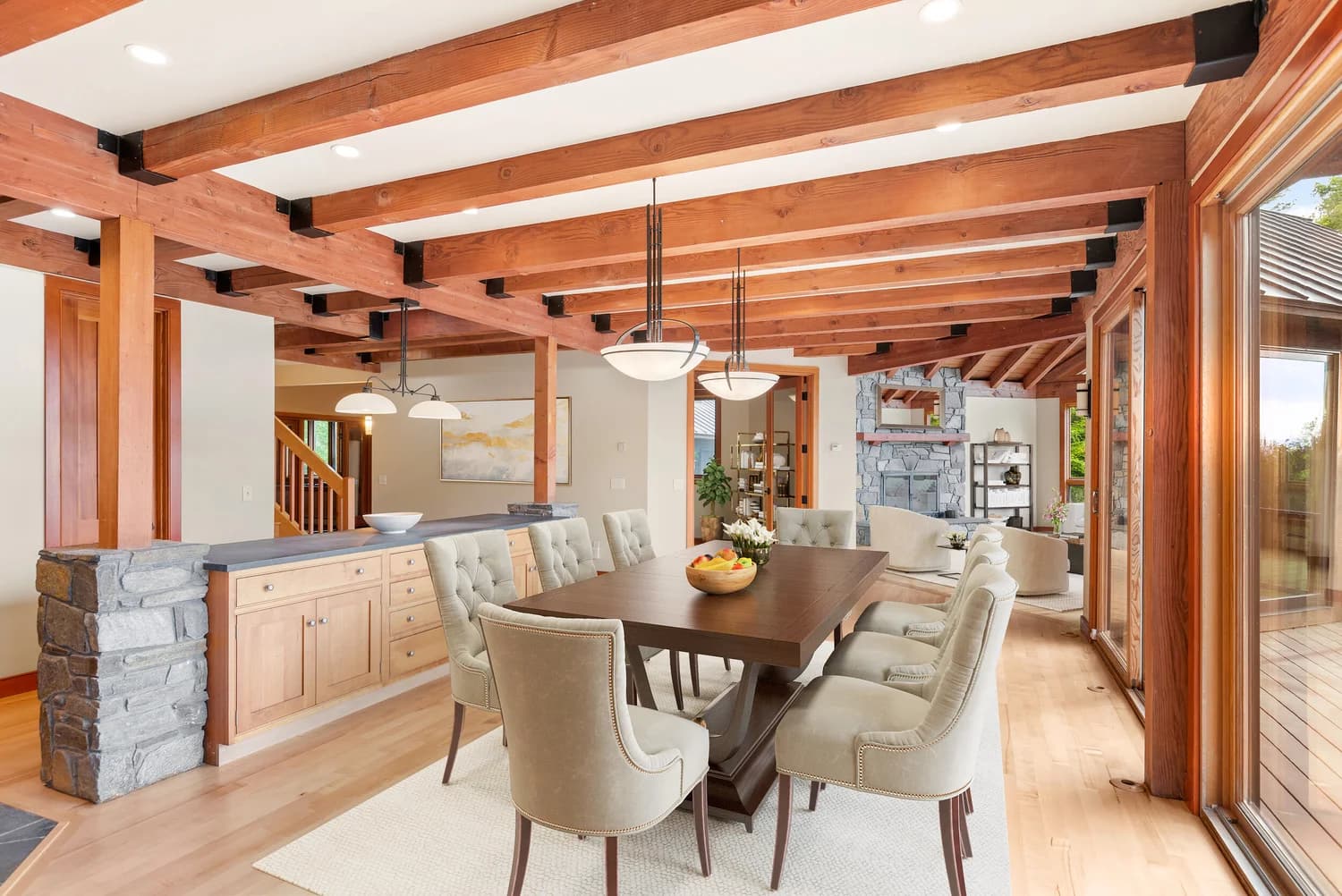
Empty rooms kill deals quietly. Buyers walk in, see blank walls and bare floors, and start cataloging problems instead of picturing life there.
The numbers behind the claim
The National Association of Realtors has tracked this for years. Staged homes spend 73% less time on the market than vacant homes, and median price premiums for staged listings consistently run 1-5% above asking. On a $600,000 home, 5% is $30,000. That dwarfs the cost of staging every time.
Days-on-market is not just a vanity metric. Every week a listing sits, buyers assume something is wrong. Price reductions follow. Negotiations get harder. A tight, well-staged listing with professional photography moves before that story starts.
What an empty room actually communicates
When a buyer walks into a vacant room, three things happen immediately.
- They cannot scale the space. A 14x16 bedroom looks small without furniture showing the proportions.
- They focus on every flaw. A scuff on the baseboard, an uneven paint edge, a window that sits slightly off-center. Furniture and styling redirect attention.
- They feel nothing. Buying a home is an emotional decision dressed up as a financial one. Vacant rooms produce no emotional response.
Photographs of vacant rooms compound all three problems. The images look institutional. Scroll behavior on listing portals is brutal: buyers decide in under two seconds whether to click deeper into a listing. A photo of an empty room rarely earns that click.
Physical staging vs. virtual staging: picking the right tool
Physical staging works best for luxury listings, new construction model units, and any property where you expect a significant volume of in-person showings. The investment is real, typically $1,500-$5,000 for a full home depending on market and vendor, but so is the ROI.
Virtual staging has closed the quality gap considerably. For listings priced under $750,000, for secondary bedrooms, or for off-market and pre-listing marketing, photoreal virtual staging delivers a compelling result at a fraction of the cost. Flylisted produces virtual staging that starts from your actual room photographs. The furniture, lighting, and decor are rendered directly into the shot, not dropped onto a stock image.
The rules around virtual staging disclosure vary by MLS. Always confirm your board's requirements and watermark or label images accordingly. That's your responsibility as the listing agent, not the photographer's.
Where photography and staging intersect
This matters more than most agents realize. Virtual staging is only as good as the underlying photograph. A dark, distorted, wide-angle-abused room photo will look wrong with furniture dropped into it. Perspective lines will be off. Shadows will not match. The result reads as fake to a trained eye, and buyers are more trained than you think.
Flylisted shoots residential listings with a 24-hour turnaround. The base photographs are wide, properly exposed, and perspective-corrected before any staging work happens. That foundation is what makes the final staged image believable.
Over 6,953 projects and $5B in residential value marketed, the pattern is consistent. Listings with professionally shot virtual staging outperform vacant listings on click-through and showing requests. There is no version of this where the vacant room wins.
When to make the call
Do not wait for the seller to bring it up. If you are taking a vacant listing, staging (physical or virtual) should be part your listing presentation as a recommended line item, not an optional add-on.
The conversation is straightforward: vacant homes take longer to sell and often sell for less. Staging costs a fraction of a price reduction. Your job is to put the best possible version of the property in front of buyers on day one, because day one is when you have the most leverage.
For listings where the seller will not budget for physical staging, virtual staging removes the excuse entirely. The cost is low. The turnaround is fast. The photographs go to market looking the way they should.
If the listing sits for 30 days and takes a $15,000 price cut, no one is going to remember that you saved $400 on staging.