
Construction change orders: visual documentation saves thousands
Change orders cost money. Visual documentation prevents disputes, speeds approvals, and protects your margin. Here's how to document construction properly.
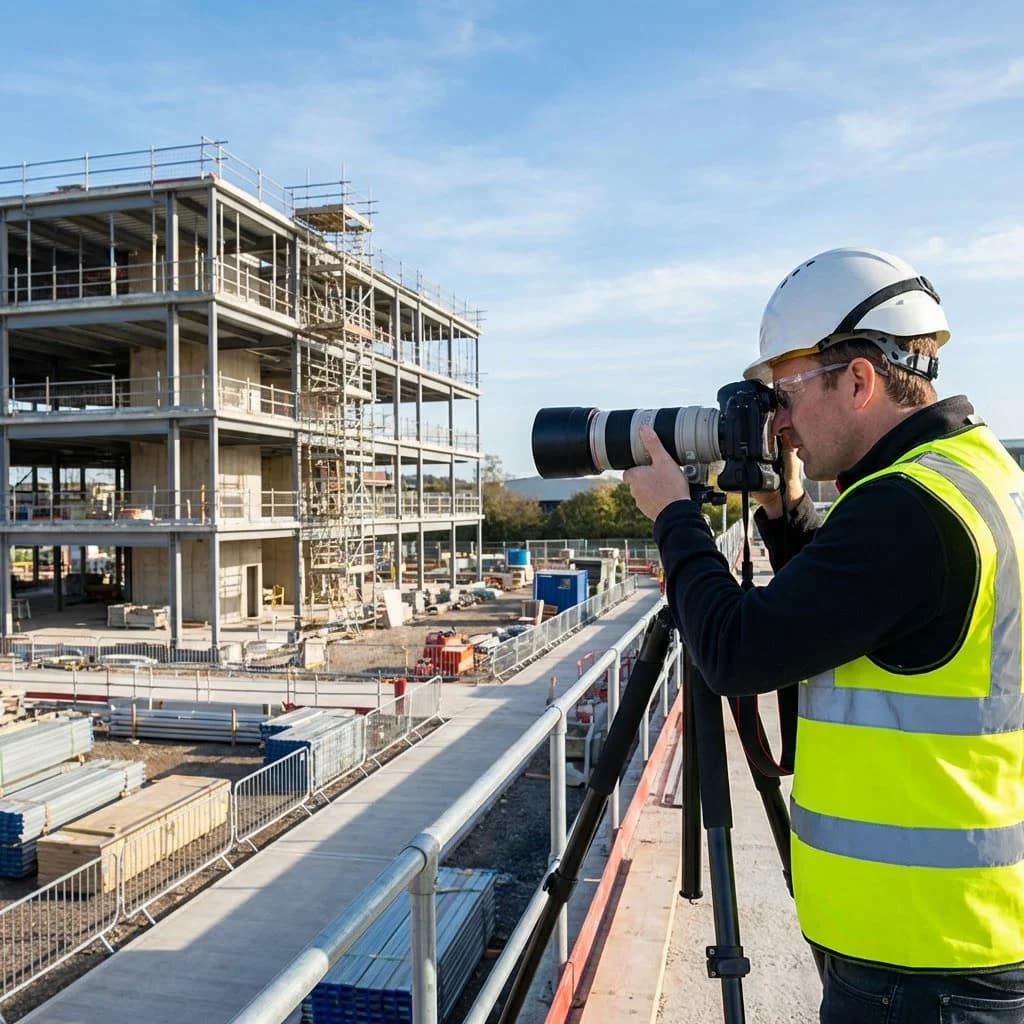
Change orders are expensive. Not just the cost of the work itself, but the back-and-forth, the disputes, the delays, and the margin erosion that comes when scope isn't crystal clear. The fastest way to control those costs is visual documentation that settles questions before they become arguments.
Why change orders spiral
A change order starts simple. A contractor finds an issue. A subcontractor claims something wasn't specified. An architect realizes the original plan won't work. What's needed next is fast alignment on exactly what changed and why. Without clear visuals, you get confusion. With confusion, you get cost overruns.
The problem: job site communication relies on phone calls, texts, and vague descriptions. "That wall is wrong" means different things to different people. So does "we need to reinforce the foundation." By the time drawings are reissued and everyone agrees, a week has passed and the margin on that change order is already smaller.
How visual documentation prevents disputes
Photography and video establish fact. When a structural issue is documented with timestamped photos and measurements, there's no debate about whether it existed. When a discrepancy between the plan and existing conditions is recorded on video with annotation, the owner sees exactly what the contractor is talking about. When you have a Matterport 3D scan from mid-project, you have an immutable record of the space at that exact moment.
This clarity does two things: it shortens approval cycles and it protects your liability. An owner who sees the problem in high-resolution photos or video is more likely to approve the change order quickly. A general contractor with solid documentation is less likely to eat the cost when the change order is questioned later.
Real-world workflow
Here's what it looks like in practice:
- A framing issue is discovered mid-build. Instead of emailing descriptions, the GC shoots a short video on site with voice-over commentary and a measurement scale in frame.
- The video is sent to the architect and owner. Both understand the problem in 90 seconds.
- The architect approves the scope change and issues a revised drawing the same day.
- The change order is signed and work resumes without delay.
Compare that to the old way: email debate, a site visit that takes two days to coordinate, questions about whether the issue was really missed in the original spec, and a week of back-and-forth before approval. The difference in project velocity is not small.
What to document
Not every photo matters. Document these moments:
- Conditions that conflict with the original plan or spec (with measurement scale visible)
- Existing conditions discovered during demolition or excavation (use multiple angles)
- Work in progress at major phases (framing, MEP rough-in, finishes)
- Quality issues or deviations from standard (with clear annotation)
- Before-and-after of completed change order work
- Site conditions that affect logistics or timeline (weather, access, conflicts)
Video with narration is especially valuable for complex issues. A 60-second video showing the problem and the proposed solution closes conversations that email threads can't.
The Matterport advantage
For larger projects, a 3D scan at major phases gives you something no photo or video can: a complete, navigable record of the space at that exact moment. If a change order dispute arises six months later, you have proof of what the space looked like when the decision was made. You can measure distances in the scan. You can show relationships between systems. A Matterport scan is particularly valuable on multi-family or commercial projects where change order volume is higher and stakes are larger.
Timing matters
Document the problem before the fix, not after. A photo of the corrected framing doesn't prove what the original issue was. A photo before correction, paired with one after, tells the complete story. This matters for disputes that come down to causation. Who caused the problem? When was it discovered? What was the right fix? Good documentation answers all three.
The cost math
A single change order dispute that drags on for two weeks can cost a GC thousands in labor downtime and overhead. A 3D scan or a professional photography session on site costs a fraction of that. Construction documentation is not overhead. It's insurance.
Flylisted has shot over 6,900 projects and logged thousands of construction documentation jobs. We understand what visual information actually resolves disputes and what gets in the way. The faster you document change orders with clarity, the faster they close.
Get your construction sites documented properly with professional photography and 3D scanning.