
Day, dusk, and twilight render variants: which channel each one wins on
Not every render variant performs the same across every channel. Here's how to match day, dusk, and twilight renders to the platforms where each one actually converts.
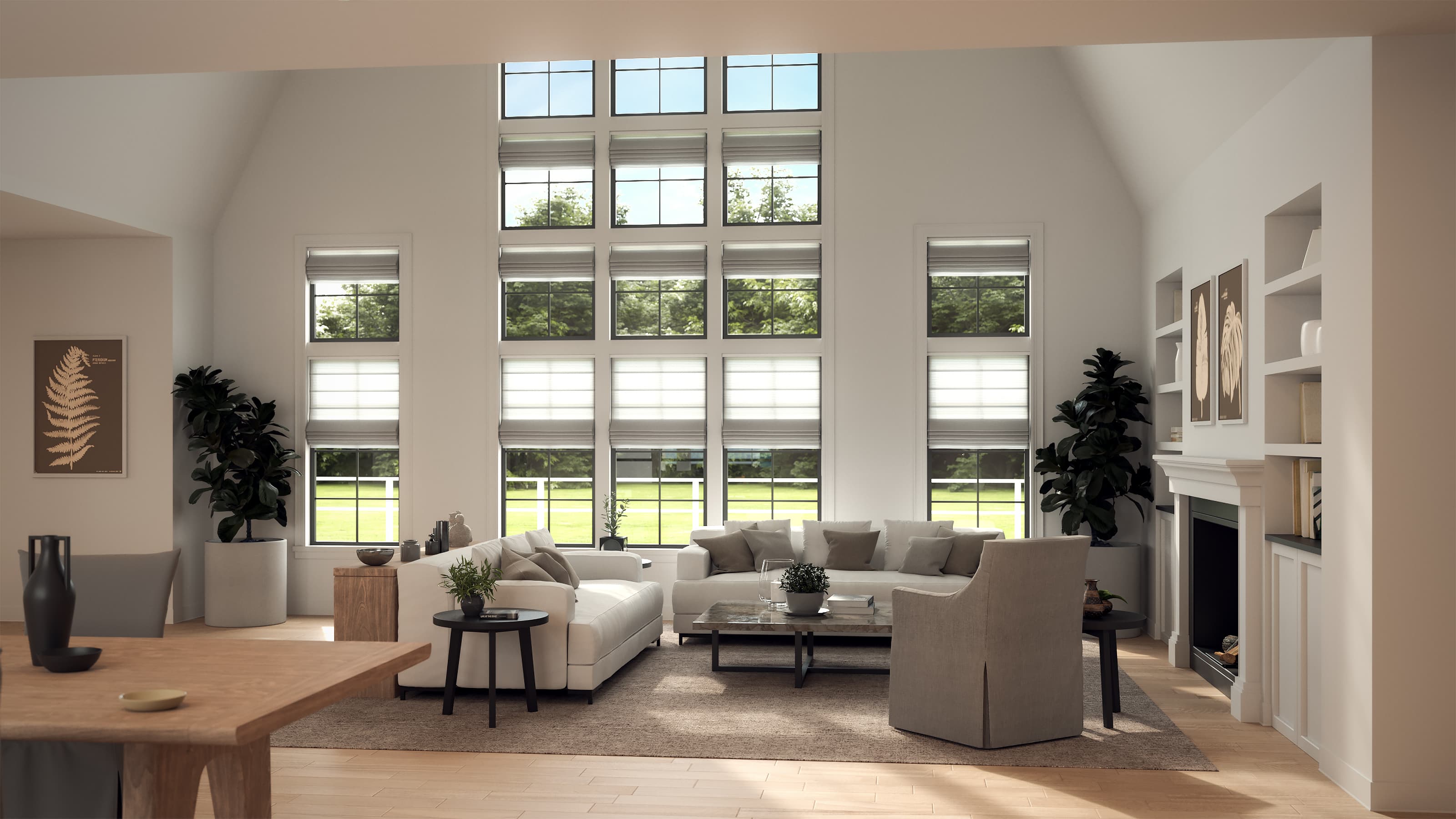
A photoreal rendering is only as useful as the channel you put it on. Day, dusk, and twilight variants each carry different emotional weight, and placing the wrong one in front of the wrong audience costs you attention you won't get back.
What each variant is actually doing
Before matching variants to channels, get clear on what each one communicates.
Day renders show the building as a functional object. Clean light, visible landscaping, readable facade materials. They answer the question: what does this thing look like?
Dusk renders catch the building in golden-hour light, roughly 30-60 minutes before sunset. The sky is warm, shadows are long, and the structure reads as aspirational without feeling theatrical. They answer: does this place feel worth wanting?
Twilight renders place the building in deep blue-hour sky with interior lights glowing. The composition is dramatic by design. They answer: can I picture myself inside this, at night, living well?
Those are three different psychological jobs. Assign them accordingly.
Where day renders do their best work
Day variants are workhorses. They belong anywhere the buyer or investor needs to make a practical judgment call.
- MLS and listing portals. Buyers scan quickly and need to orient themselves. A clean midday render communicates square footage, massing, and materials without distraction.
- Investor and lender decks. Finance audiences are skeptical of drama. A well-lit, neutral-sky render reads as credible. A twilight render in a pro forma deck can actually trigger doubt.
- Architect and permitting presentations. The audience is evaluating compliance and design intent, not mood.
- Website hero images for builder sites. When a buyer lands cold, day renders load context fast.
For multi-family developers and builders we work with across New England and South Florida, day renders are almost always the primary deliverable. Everything else is a supplement.
Where dusk renders earn the placement
Dusk is the most versatile of the three. It photographs like something real but still carries enough warmth to stop a scroll.
- Email campaigns and drip sequences. Dusk renders outperform day renders in open-to-click because they read as editorial, not transactional.
- Paid social (Meta, Instagram). The warm palette competes well in-feed. Buyers don't stop for renders that look like technical diagrams.
- Print collateral. Brochures, postcards, and sales center displays benefit from the dimensional quality dusk lighting creates. Color reproduction also tends to be richer.
- Press and editorial pitches. If you're trying to place a project in a regional publication or a design blog, dusk renders look like photography. Day renders can look like software output.
If a client tells us they can only afford two variants, dusk and day is the right pair. Twilight is a specialty tool.
Where twilight renders convert
Twilight is high-drama, which means it works hard in short-attention contexts where you need an immediate emotional response.
- Luxury pre-sales and reservation campaigns. The first email to a waitlist, the teaser reel, the countdown landing page. Twilight creates urgency and desire in a single frame.
- Hotel and resort marketing. Hospitality buyers are buying an experience, not a floor plan. A twilight render of a pool terrace or rooftop bar does more work than any day shot of the same space.
- Organic social, especially Instagram and Pinterest. The deep blue sky and glowing windows perform consistently well in saves and shares, which feed the algorithm more than likes do.
- Sales center feature walls. One large-format twilight render behind the reception desk sets the tone for every conversation that follows.
Twilight renders placed on the MLS or in a lender deck tend to create friction. They're not the problem. They're just in the wrong room.
How to brief the project before you shoot
When you're ordering 3D renderings, the channel plan should come before the camera angle decisions, not after. Here's a fast brief checklist:
- List the three or four placements this render needs to cover in the first 90 days
- Identify which placement is primary (the one that drives reservations or inquiries)
- Match the primary placement to the variant list above
- Order the remaining variants to cover secondary channels, not to have options
Running three variants on every project without a plan is expensive and creates asset management problems. Running the right two variants with a clear deployment schedule is more efficient and gets better results.
At Flylisted, our 3D rendering work spans pre-construction residential, multi-family, hospitality, and commercial across New England, South Florida, the Caribbean, and California. We've helped market over 4,000 properties, and the projects that perform best always have a channel strategy behind the asset order, not just a preference for which sky looks nice.
If you're planning a rendering package for an upcoming project, see how we build out render deliverables on our renderings page.